

Across these sectors Absolar have installed solar PV systems that have successfully reduced energy bills without any disruption to their business operations.

Large roof space availability. Significant energy bill reduction with additional income stream from energy export.

High electricity demand from office appliances, matching solar PV generation pattern.

As an energy-intense industry, manufacturing facilities benefit significantly from having free, clean solar energy.
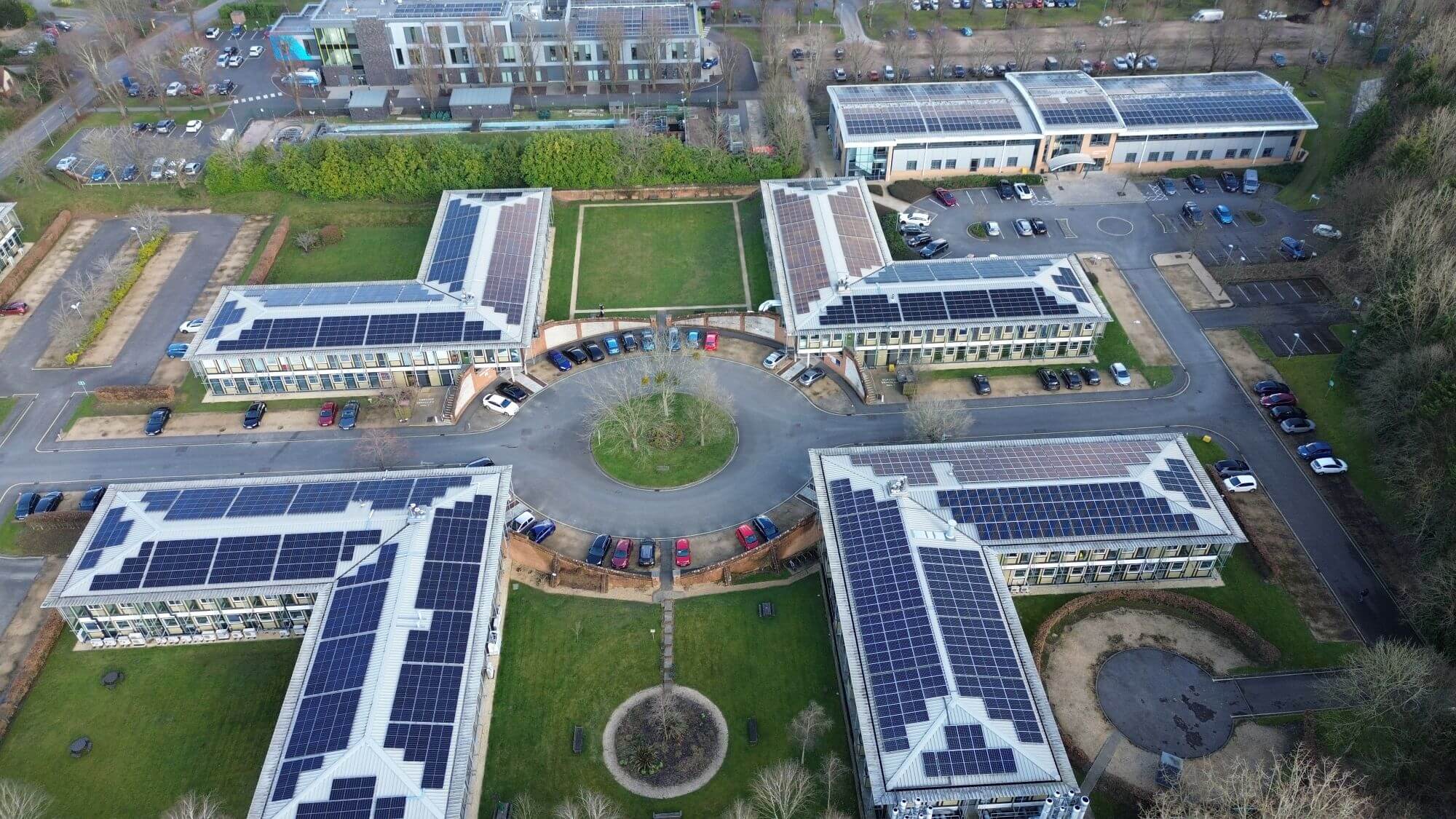
Consistent building upgrade with property value and ESG benefits. Significant operational cost savings.
.webp)
Optimal roof space available for solar panels. Low installation costs and potential for export income

Significant energy demand could be offset by solar energy, reducing operational costs.

Complex roof structure requires solar simulation modelling, matching demand profile with solar generation.

High energy usage by printing equipment offset by renewable electricity, significantly reducing operational costs

Large rooftop spaces for electricity generation, reducing operational costs significantly.

Energy simulation to match consumption profile with roof space assessment.

Improving ESG, reducing energy costs, future-proof building with energy system upgrade.

Electricity usage in computing equipment met by renewable energy, improving ESG and energy independence.
.jpg)
Constant electricity demand from the use of CNC machines has been offset by clean, free solar electricity.


According to the UK Warehousing Association, there is 424 million square feet of warehousing space spanning over 100,000 sq ft. This alone could deliver nearly 10,000 acres of space for solar PV use, not to mention the potential in other property uses such as office buildings, supermarkets, and so on.
David Thomas, Partner at Vail Williams (read article)
Warehouse and distribution buildings combine three things solar loves: vast unshaded roof area, steel portal frames designed to carry load, and steady daytime electricity demand from lighting, conveyors, refrigeration and charging. That combination is why warehouse projects routinely deliver the strongest returns of any commercial building type we assess.
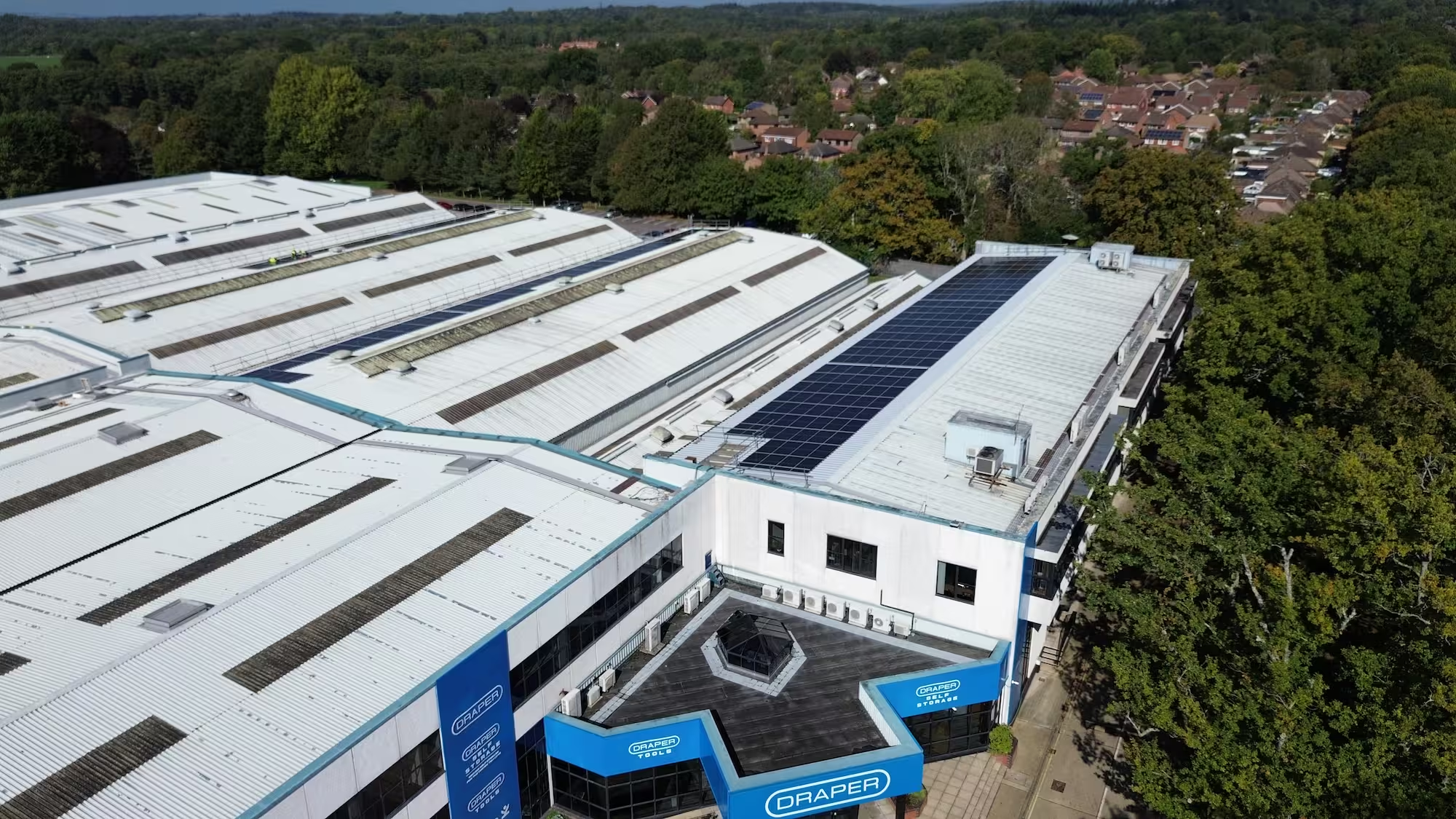
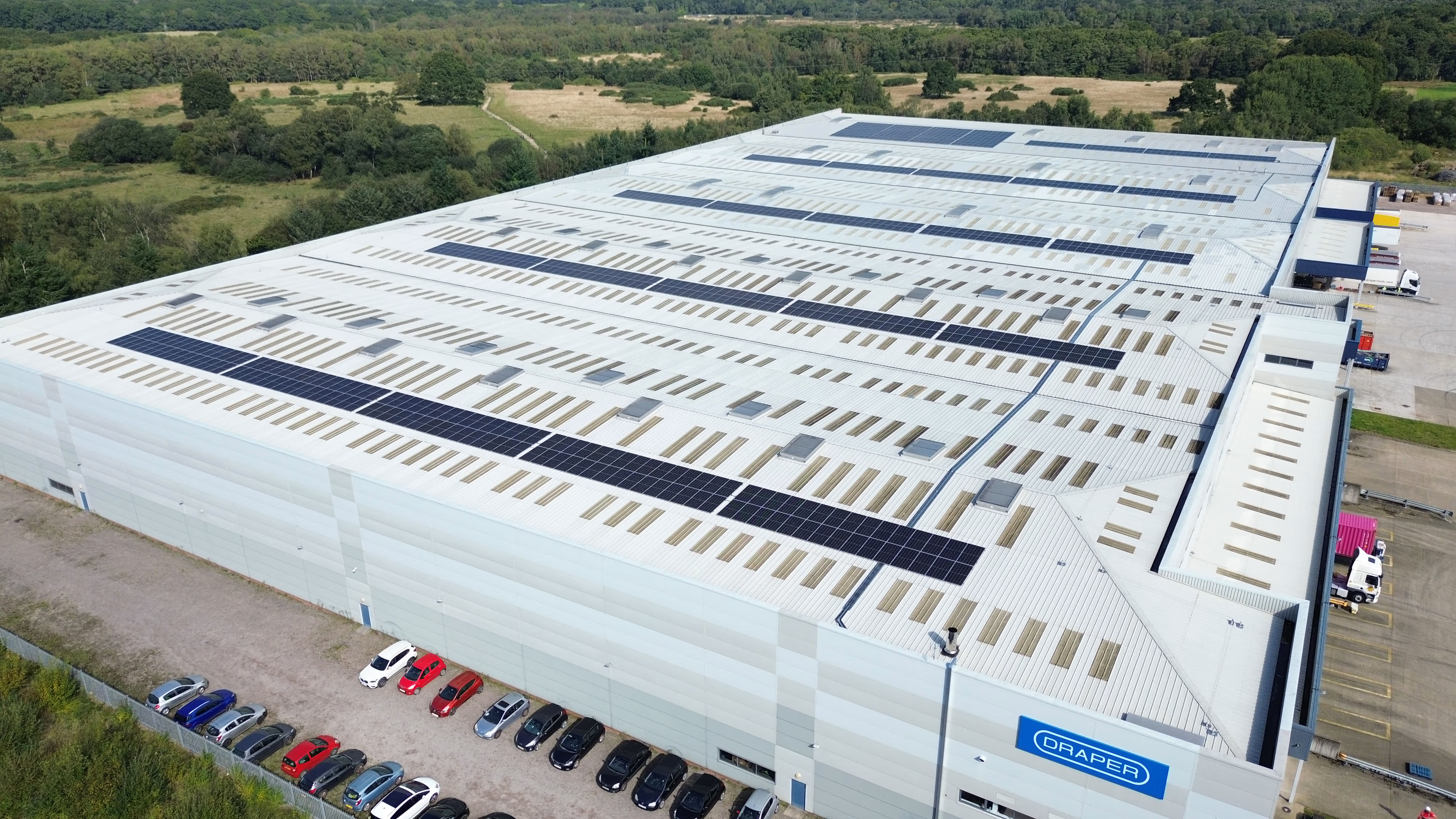
Our flagship example is Draper Tools in North Baddesley, where a 900+ panel installation now generates 73% of the facility's power needs and prevents over 100 tonnes of carbon emissions a year, with a payback of around four years.
Warehouses have large rooftop areas, able to receive sufficient irradiance for solar panels to generate electricity. By installing rooftop solar panels, businesses can drastically reduce their electricity consumption from the grid and lower monthly energy bills. For commercial buildings in the UK, you can request a free solar survey here.
Using representative market values, a typical warehouse solar project delivers over 30% internal rate of return, with an average payback of under four years. With a system lifespan of 30+ years, solar gives warehouse owners long-term energy price stability and strong financial performance well beyond payback.
Solar is a capital improvement that enhances warehouse value and strengthens sustainability credentials that occupiers increasingly demand. Through Absolar's finance partners, asset-based funding lets owners install without upfront capital, protecting cashflow while the system pays for itself.
When your system generates more than the warehouse consumes, Absolar arranges export of the excess to the grid under competitive tariffs. Selling surplus energy to certified suppliers creates a new income stream, particularly valuable at weekends and during quieter operational periods.
Installing commercial solar is one of the most effective single actions a business can take to cut emissions, improve energy security and meet ESG targets. For landlords, it also helps attract and retain sustainability-minded tenants.
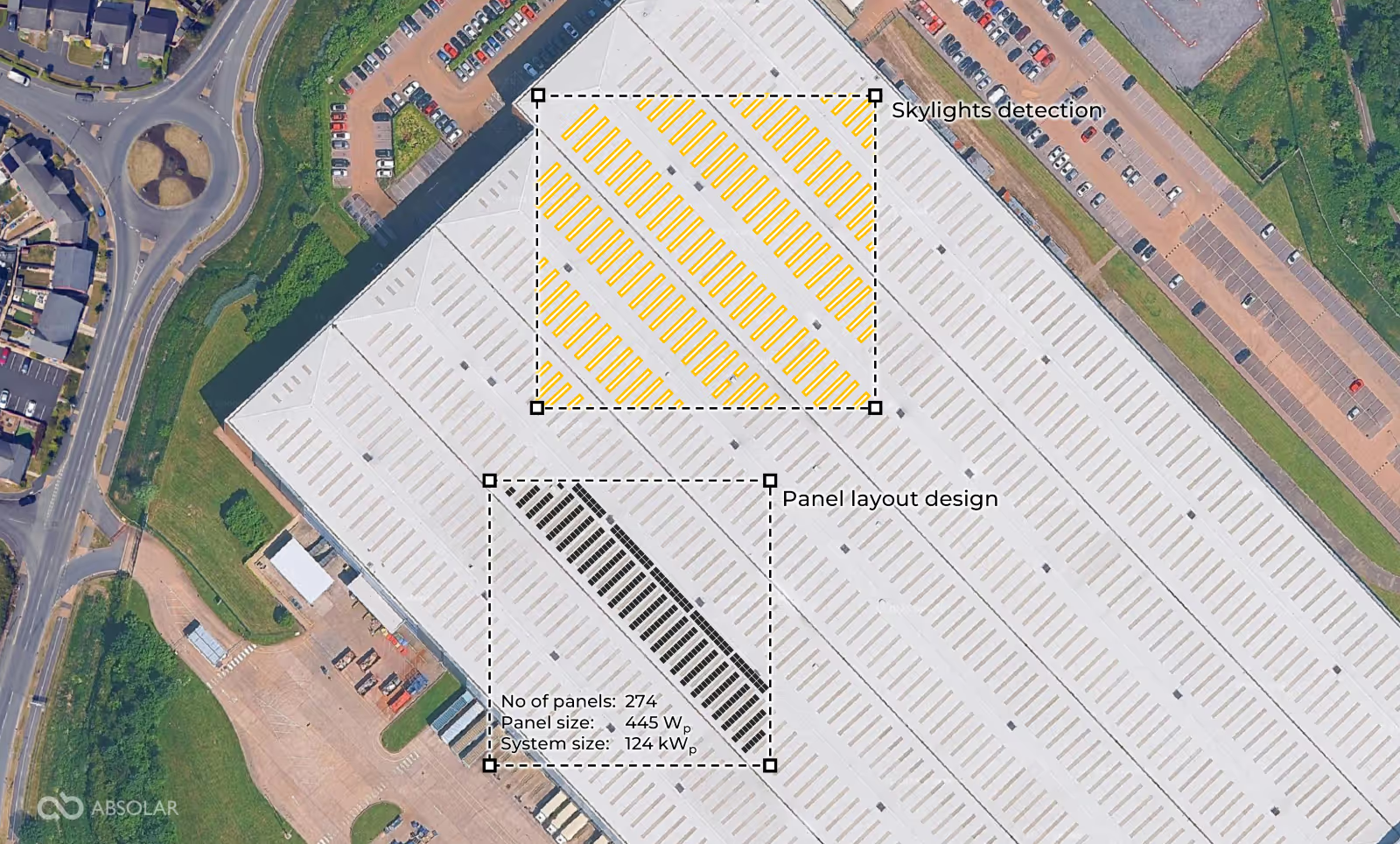
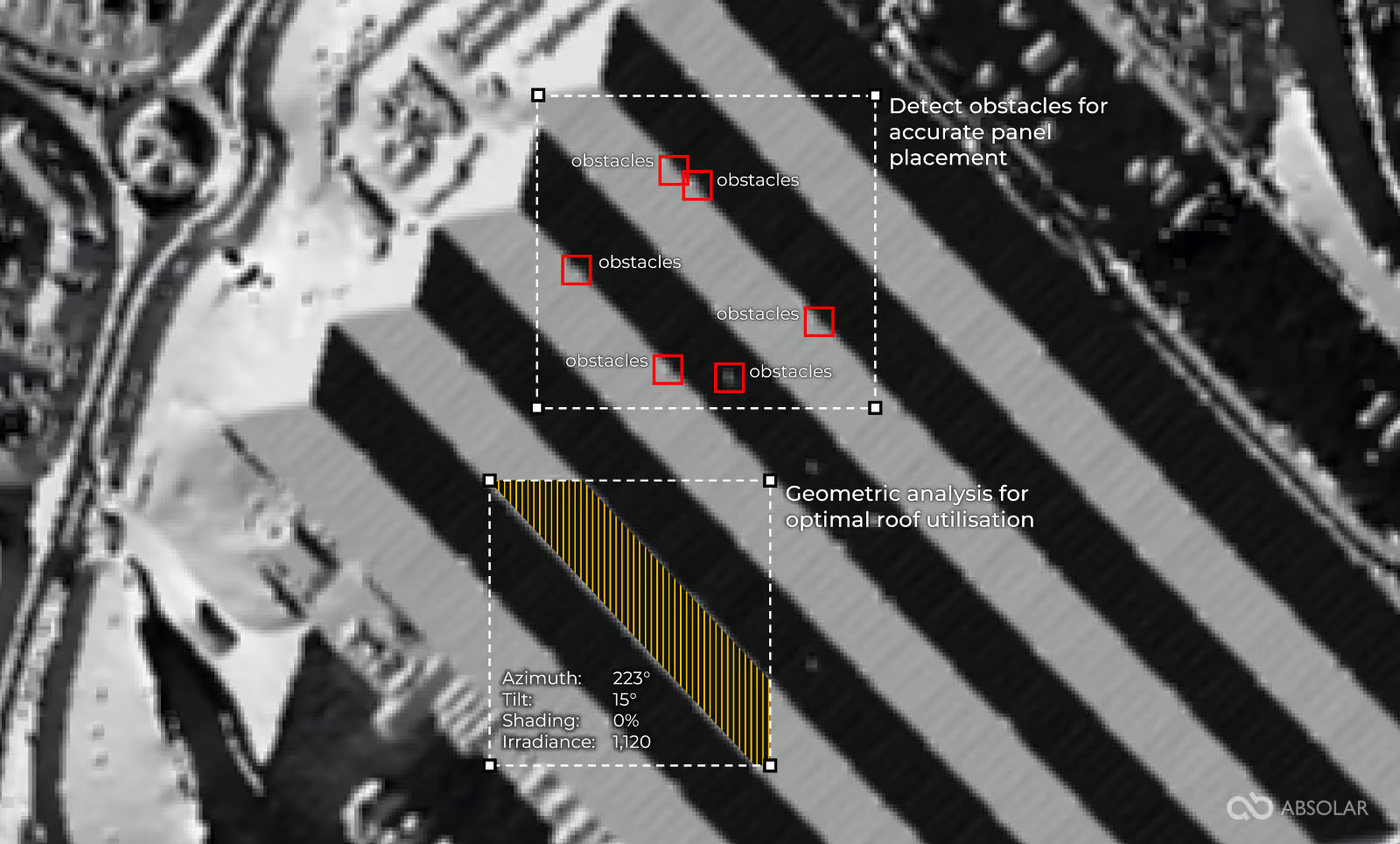
Absolar uses high-resolution LiDAR mapping and AI analysis to assess each warehouse roof in detail, evaluating:
Large-span warehouse roofs often have multiple sections and numerous skylights. Careful design around these features matters both for installer safety and for generation, which is why our in-house engineers plan panel placement, cable routing and access in detail before installation begins.


.png)










With a footprint of over 25,000 square metres and a span exceeding 210 metres, the Draper Tools warehouse is one of the largest solar installations in Hampshire.
The solar PV system has been a significant investment for us as a business but one that we hope represents our commitment to the future and to sustainable business practices. We might be over 100 years old but we're not standing still.
Matt Sheen, CEO, Draper Tools
The project was unveiled by Caroline Nokes MP and has since led to a second Absolar installation at Draper's Chandler's Ford headquarters.
Absolar supports businesses in their transition to clean, renewable energy through expertly delivered commercial solar installations. Our in-house team brings deep technical expertise and local knowledge to every project, helping organisations across the UK reduce energy costs, cut carbon emissions and gain greater energy independence with systems tailored to their operational needs.
Whether working with industrial parks or transforming commercial rooftops in city centres, our AI technology and in-house design team ensure each project delivers long-term performance and maximum return on investment.
At Absolar, engineering is at the heart of everything we do. Our commitment to quality starts with rigorous site analysis and design, ensuring every installation is tailored for optimal performance and longevity. We design systems to last, using proven technologies and components that meet the highest industry standards.
Our in-house engineering team brings decades of experience across electrical, structural and renewable energy disciplines. This lets us anticipate and solve challenges before they become problems, from feasibility study to final commissioning, with clear communication and no surprises. We stand behind our work with robust quality assurance, performance monitoring and post-installation support.

Steel portal frame warehouses are generally well suited, but every project starts with a structural assessment of the frame and purlins. Our remote survey flags likely constraints before you commit to anything.
No. Installations at Draper Tools (900+ panels) and Hobbs the Printer (489 panels) were completed with no interference to day-to-day operations. Access, deliveries and loading bays are planned around your working patterns.
Our AI roof detection identifies skylights, flues, vents and plant automatically from LiDAR data. Panel layouts are designed around them from the outset, protecting both safety and generation.
A remote survey reports back within days without a site visit. From signed proposal to a generating system, most warehouse projects complete within three to four months, depending on DNO grid connection timescales.
Most rooftop solar on commercial buildings falls under permitted development. We confirm this during design and handle any applications where required.
There are established structures for this, including power purchase agreements where the tenant buys solar energy at a discount while the landlord owns the asset. Our whitepaper on commercial solar for landlords covers the options in detail.


The solar PV system has been a significant investment for us as a business but one that we hope represents our commitment to the future and to sustainable business practices. We might be over 100 years old but we’re not standing still, we’re always looking to the future, adapting and evolving to meet the changing needs of our customers.
Matt Sheen, CEO at Draper Tools

I had the privilege of unveiling Draper Tools' ambitious 900+ solar panel installation at their North Baddesley site this week. This is already generating 73% of the facility’s power needs and is set to prevent over 100 tonnes of carbon emissions per year.
Delivered by local solar specialists Absolar, this project sets a strong example of how businesses can lead the way in sustainability while also securing long-term energy savings.
Caroline Nokes, MP

An exceptional service from start to finish. Planning, preparation and installation of our 489 PV panels was completed with clear and detailed communication and there was no interference to day-to-day operations. Highly recommended.
Chris Hobbs, Business Development Director at Hobbs the Printer
.jpg)
From the very first meeting, I was won over and every touch point since has just reinforced my view of Absolar. They are brilliant and at what they do - and infectiously passionate about it. The initial proposal was logically laid out, compelling and contained all the financial justification elements a business would need (this made a potentially subjective decision highly objective). Having had our system for 3 years, we have experienced amazing ongoing collaboration and support. I could not be happier with our PV system and the support we get from Absolar… just awesome...
Dr Stephen Rowe, Managing Director at DEKRA UK

Industrial | Warehouse
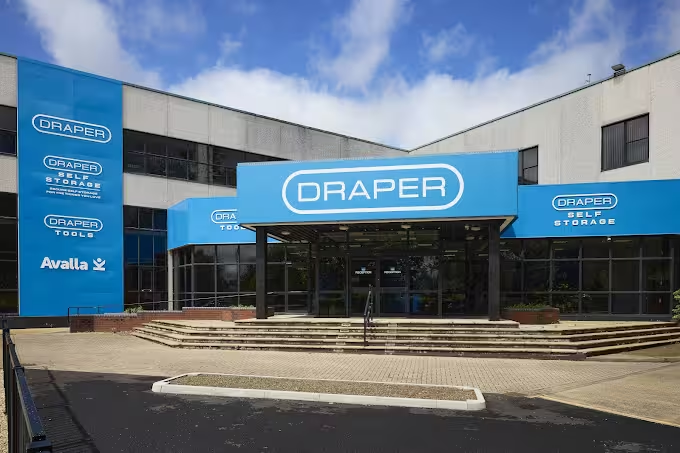
The Draper Tools Ltd headquarters in Chandler's Ford, Hampshire is a large industrial–commercial complex designed to combine corporate office space with extensive warehousing and distribution facilities.
The building sits along Hursley Road and presents a broad, functional frontage typical of late-20th-century light-industrial architecture, with a strong emphasis on practicality and logistics. Architecturally, the complex is characterised by large-span warehouse structures constructed with steel portal frames and wide loading bays to accommodate goods handling and vehicle access.
...
Industrial | Warehouse
With a footprint of over 25,000 square metre, the Draper Tools building in North Baddesley is a large scale industrial warehouse, supplying quality trade, professional and DIY tools. The building has a span of over 210 metres, with multiple roof sections and numerous skylights, which need to be carefully considered as part of the solar system design to 1) ensure health and safety during the installation process and 2) to optimise solar energy generation.
...

Manufacturing | Warehouse
ACES is a commercial compressor manufacturer specialising in industrial cooling, refrigeration, and heating appliances, located in Oxford. Their manufacturing facility is in a building with a trapezoidal roof and a weekday energy consumption profile from 8 am to 5 pm.
...

Our latest whitepaper is designed to help businesses and commercial landlords navigate the opportunities and challenges of solar energy adoption. This in-depth guide explores the key steps to developing successful commercial solar projects, whether you own a single property or manage a diverse portfolio. Drawing on our real-world experience, the whitepaper covers everything from assessing rooftop suitability to understanding performance guarantees and compliance requirements.
Crucially, it also breaks down the latest financing options available, including power purchase agreements (PPAs), capital investment models, and landlord-tenant cost-sharing strategies. For commercial landlords, we offer practical guidance on how to structure solar projects that align with lease terms and add long-term value to your properties. Whether you're looking to reduce operational costs, meet ESG targets, or attract sustainability-minded tenants, this whitepaper is your essential roadmap to making solar work for your business.



© 2026 Absolar Solutions Limited
.jpg)
