Across these sectors Absolar have installed solar PV systems that have successfully reduced energy bills without any disruption to their business operations.

Large roof space availability. Significant energy bill reduction with additional income stream from energy export.

High electricity demand from office appliances, matching solar PV generation pattern.

As an energy-intense industry, manufacturing facilities benefit significantly from having free, clean solar energy.
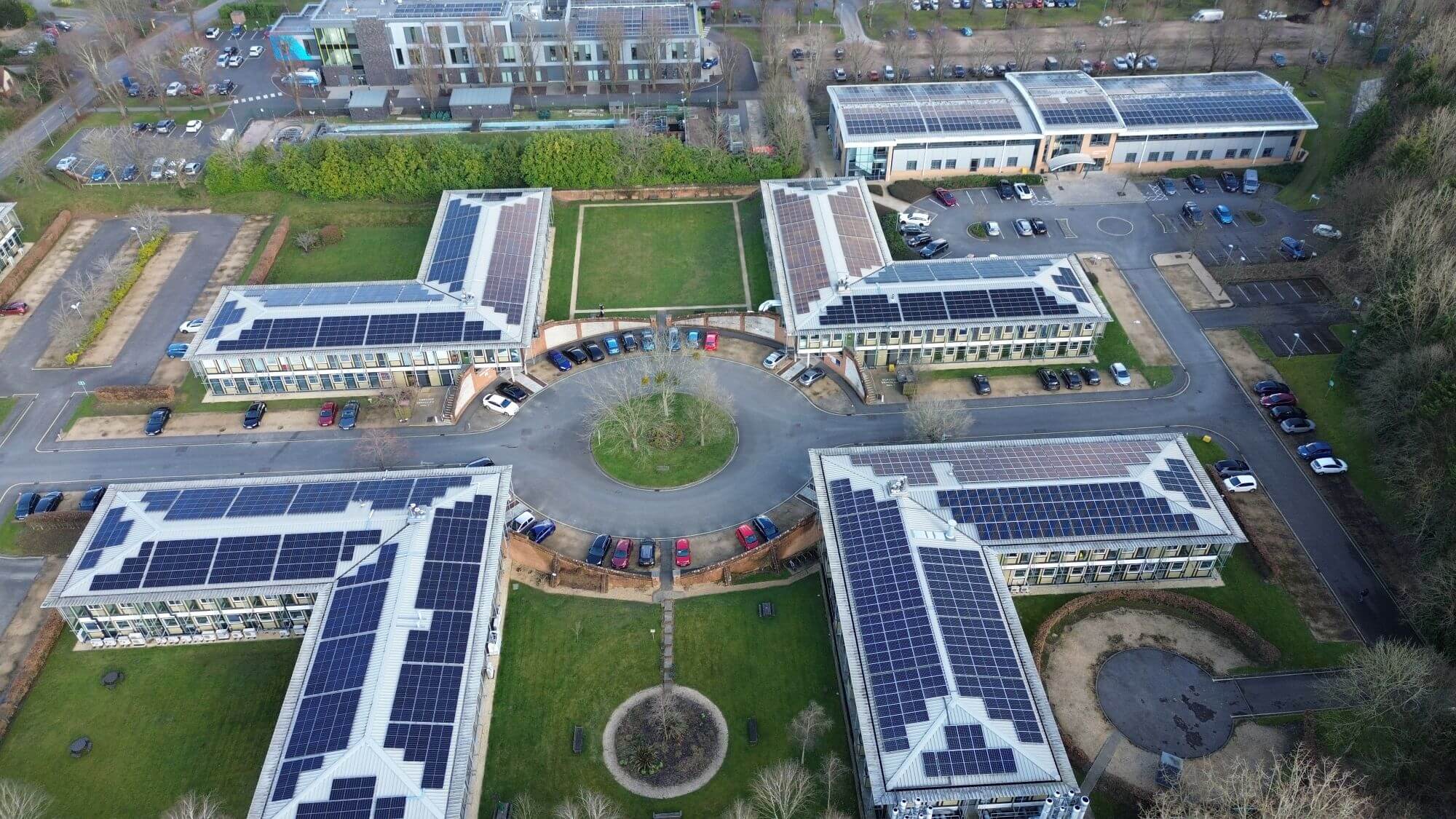
Consistent building upgrade with property value and ESG benefits. Significant operational cost savings.
.webp)
Optimal roof space available for solar panels. Low installation costs and potential for export income

Significant energy demand could be offset by solar energy, reducing operational costs.

Complex roof structure requires solar simulation modelling, matching demand profile with solar generation.

High energy usage by printing equipment offset by renewable electricity, significantly reducing operational costs

Large rooftop spaces for electricity generation, reducing operational costs significantly.

Energy simulation to match consumption profile with roof space assessment.

Improving ESG, reducing energy costs, future-proof building with energy system upgrade.

Electricity usage in computing equipment met by renewable energy, improving ESG and energy independence.
.jpg)
Constant electricity demand from the use of CNC machines has been offset by clean, free solar electricity.


Farm buildings are some of the best candidates for solar in the UK. Large, unshaded rooftops. High daytime energy use from cold storage, milking parlours, grain drying and machinery. Rising electricity prices eating into already tight margins.
Absolar designs and installs commercial solar PV systems for farms across the South of England. We start with a free remote survey of every building on your estate, so you know which rooftops will deliver the strongest return before anyone sets foot on site.
Get a free remote solar survey
Renewables like Solar give farmers the chance to cut costs, reduce emissions and become more resilient. It's a win-win for the farm and the planet.
Minette Batters, President of the National Farmers Union (NFU) [read here]
Agricultural buildings offer three natural advantages over most commercial rooftops.
Roof space. Barns, grain stores and livestock sheds typically have large, simple pitched roofs with minimal shading. That means lower installation costs per panel and more generating capacity per building.
Daytime demand. Dairy units, refrigeration, ventilation and processing equipment run through daylight hours, exactly when solar generates. The more energy you use on site, the faster the system pays for itself.
Export income. Summer surplus can be sold back to the grid. Absolar secures preferential export tariffs for clients, turning quiet months into a revenue stream that offsets winter consumption.
A typical farm installation reaches payback in four to six years, with panels warrantied for 25 years or more. Everything after payback is essentially free electricity.
Costs depend on system size, roof type and how much of the energy you use on site. As a real-world benchmark, the 137 kWp system we installed for Belcher Farms across two sites delivers annual savings of around £27,000 with a payback of 4 years and 9 months on conservative assumptions.
Smaller single-barn systems start lower, and grant funding or asset finance can reduce upfront cost further. The fastest way to get an accurate figure for your farm is a free remote survey, which models your actual rooftops using LiDAR data and produces cost and payback projections without a site visit.
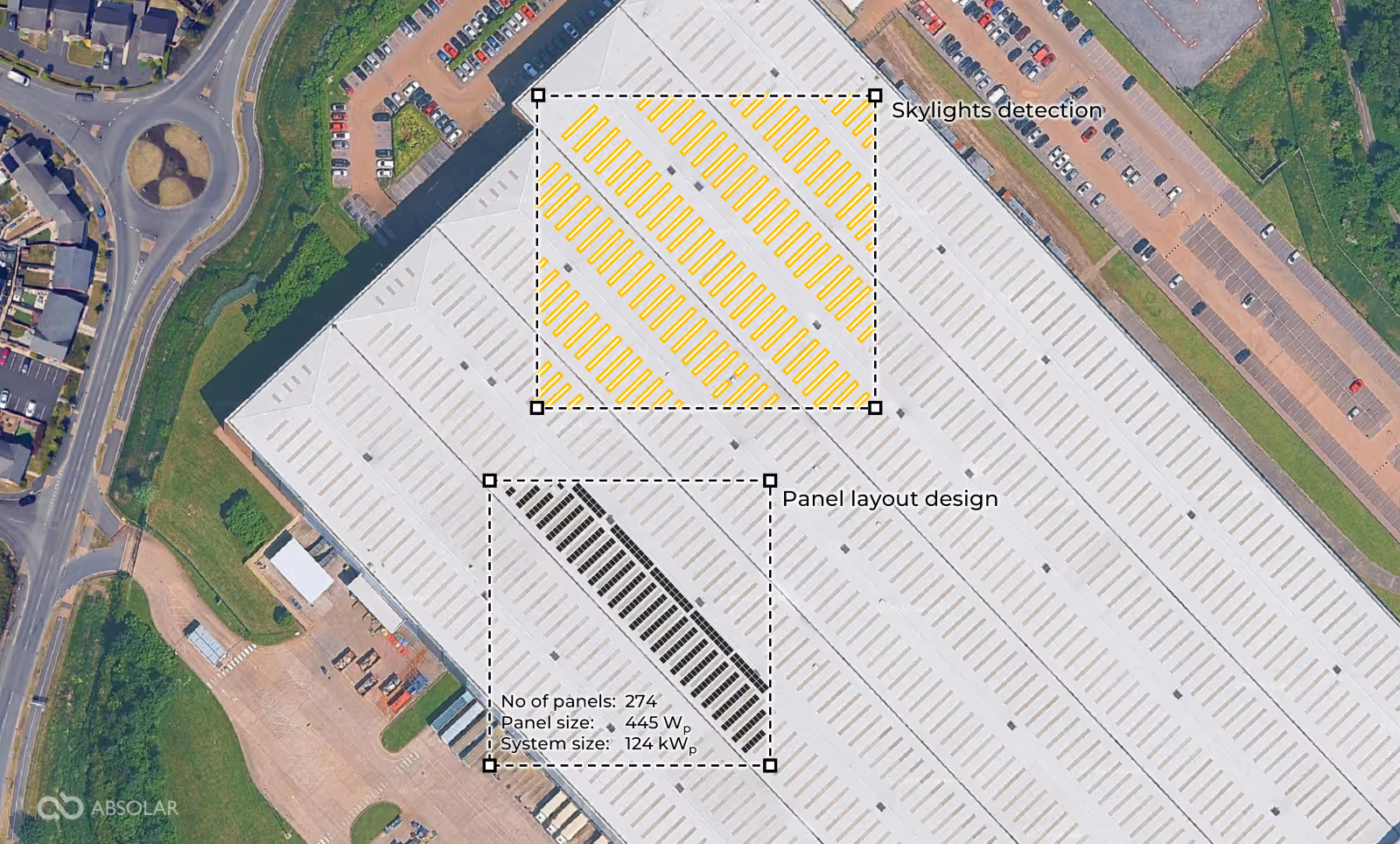
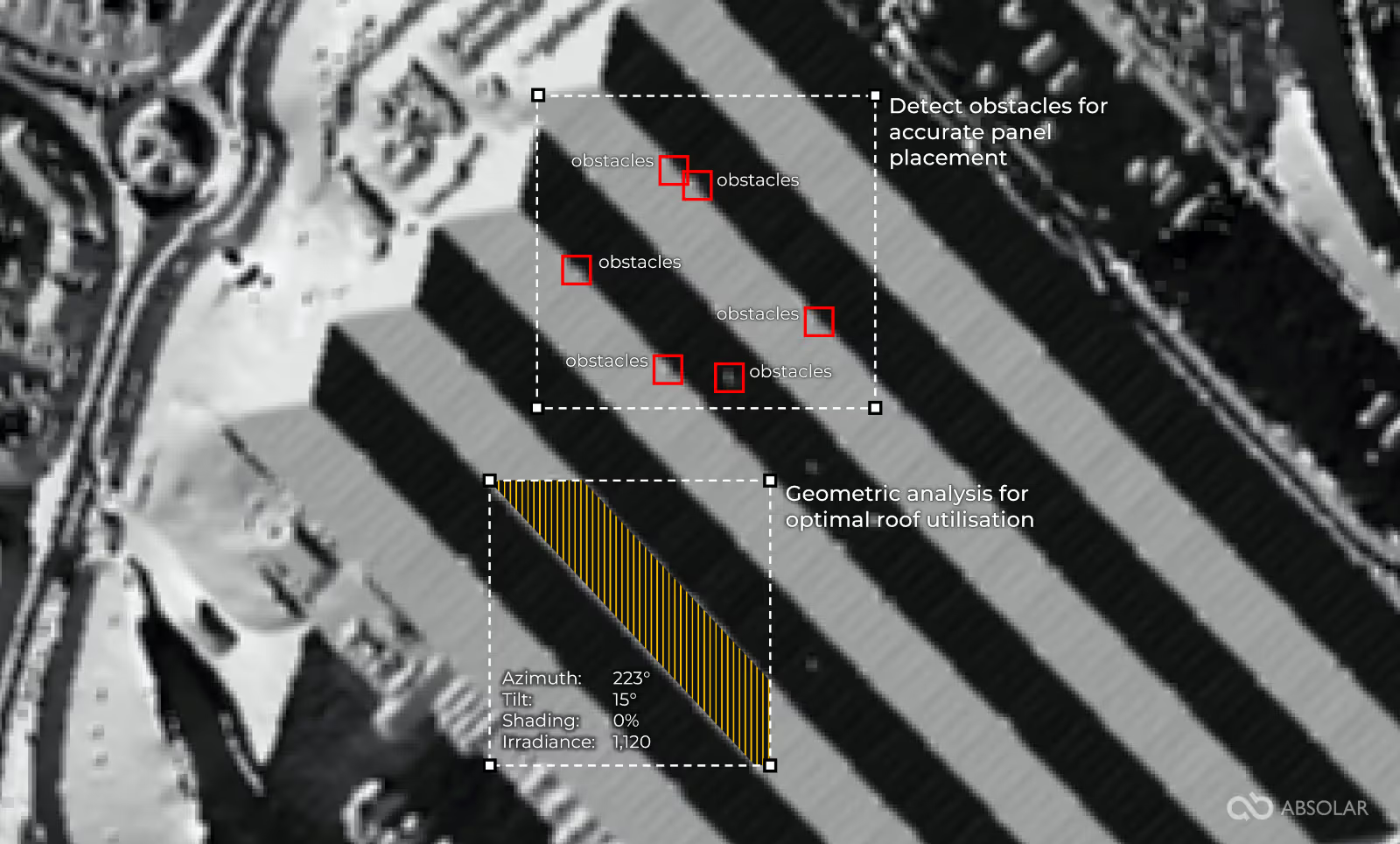
Absolar uses high-resolution LiDAR mapping and AI analysis to assess every building on a farm or agricultural estate for solar potential. For each rooftop we evaluate:
The result is a clear ranking of your buildings by suitability and return. Farm owners can invest in the highest-value rooftops first, then phase the rollout so early savings help fund later stages.


.png)










Belcher Farms operates several agricultural sites, including Newlands Farm and Grange Farm, mixed-use sites with high year-round energy demand from livestock operations, machinery and tenant use. Like many farms, both were under pressure from rising electricity prices.
The family wanted a long-term energy solution that would offset rising costs, improve energy resilience and monitoring, and support their broader sustainability objectives across the estate.
Absolar remotely assessed four farm sites and prioritised Newlands and Grange based on energy usage and rooftop suitability. Tailored designs maximised self-consumption, with surplus exported under a preferential tariff secured by Absolar.
Building on this success, Belcher Farms and Absolar are planning further installations across the estate, particularly in the dairy operation where consistent energy demand makes solar especially effective.
Think portfolio-wide rather than building-by-building; a multi-site view identifies the strongest returns first. Design around livestock and daily operations, with inverter placement and roof access planned to avoid disruption. And secure export rates early, since a good tariff meaningfully improves lifetime returns.

Grant schemes for agricultural solar open and close regularly, including rounds of the Farming Investment Fund and regional decarbonisation programmes. Absolar tracks live opportunities and flags eligible schemes as part of every proposal. See our current list on the [Grant Opportunities] page, or ask us to check eligibility for your farm.
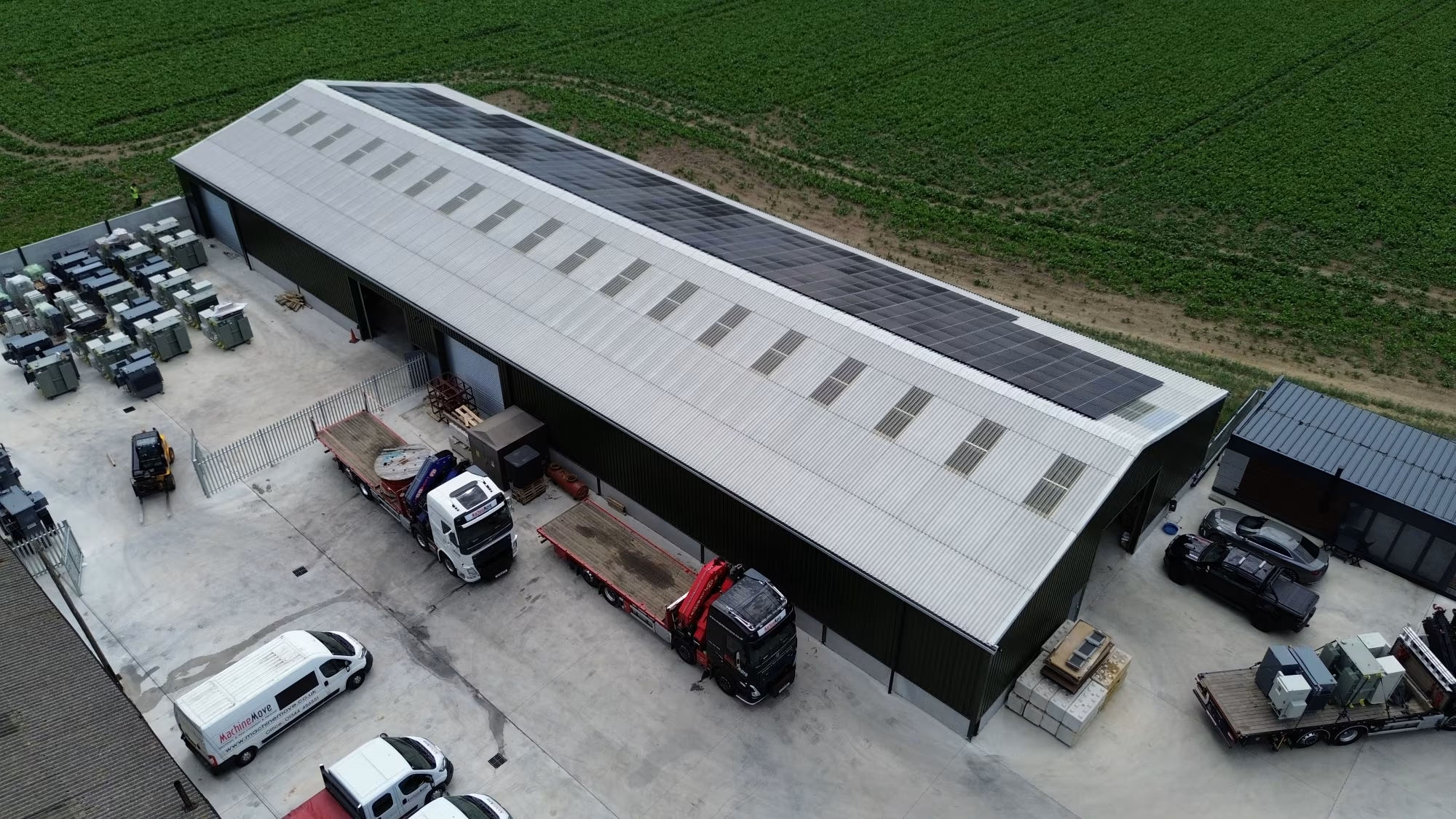

Most modern steel-framed agricultural buildings are. As part of every project we carry out a structural assessment, and our remote survey flags likely constraints before any commitment is made.
No. We plan installation around your working patterns, including livestock routines and seasonal peaks. Clients such as Hobbs the Printer and Draper Tools have had systems of 400 to 900 panels installed with no interruption to daily operations, and the same approach applies on farms.
Yes. Under the Smart Export Guarantee, and through preferential tariffs Absolar negotiates for clients, summer surplus becomes export income. For Belcher Farms this seasonal surplus helps offset higher winter consumption.
Particularly well. Milking, cooling and ventilation create consistent daytime demand that matches solar generation closely, which is why Belcher Farms' next phase focuses on their dairy sites.
A remote survey takes two minutes to request and reports back without a site visit. From signed proposal to a generating system, most farm projects complete within three to four months depending on grid connection timescales.
Most rooftop solar on agricultural buildings falls under permitted development. We confirm this during design and handle any applications where needed.


The solar PV system has been a significant investment for us as a business but one that we hope represents our commitment to the future and to sustainable business practices. We might be over 100 years old but we’re not standing still, we’re always looking to the future, adapting and evolving to meet the changing needs of our customers.
Matt Sheen, CEO at Draper Tools

I had the privilege of unveiling Draper Tools' ambitious 900+ solar panel installation at their North Baddesley site this week. This is already generating 73% of the facility’s power needs and is set to prevent over 100 tonnes of carbon emissions per year.
Delivered by local solar specialists Absolar, this project sets a strong example of how businesses can lead the way in sustainability while also securing long-term energy savings.
Caroline Nokes, MP

An exceptional service from start to finish. Planning, preparation and installation of our 489 PV panels was completed with clear and detailed communication and there was no interference to day-to-day operations. Highly recommended.
Chris Hobbs, Business Development Director at Hobbs the Printer
.jpg)
From the very first meeting, I was won over and every touch point since has just reinforced my view of Absolar. They are brilliant and at what they do - and infectiously passionate about it. The initial proposal was logically laid out, compelling and contained all the financial justification elements a business would need (this made a potentially subjective decision highly objective). Having had our system for 3 years, we have experienced amazing ongoing collaboration and support. I could not be happier with our PV system and the support we get from Absolar… just awesome...
Dr Stephen Rowe, Managing Director at DEKRA UK

Agriculture
Belcher Farms operates multiple agricultural sites across the region, including Newlands Farm and Grange Farm, mixed-use sites with high year-round energy demands from livestock operations, machinery and tenant occupants. Like many farms, these were facing significant cost pressure due to the continued rise in energy prices amongst other economic burdens.
...
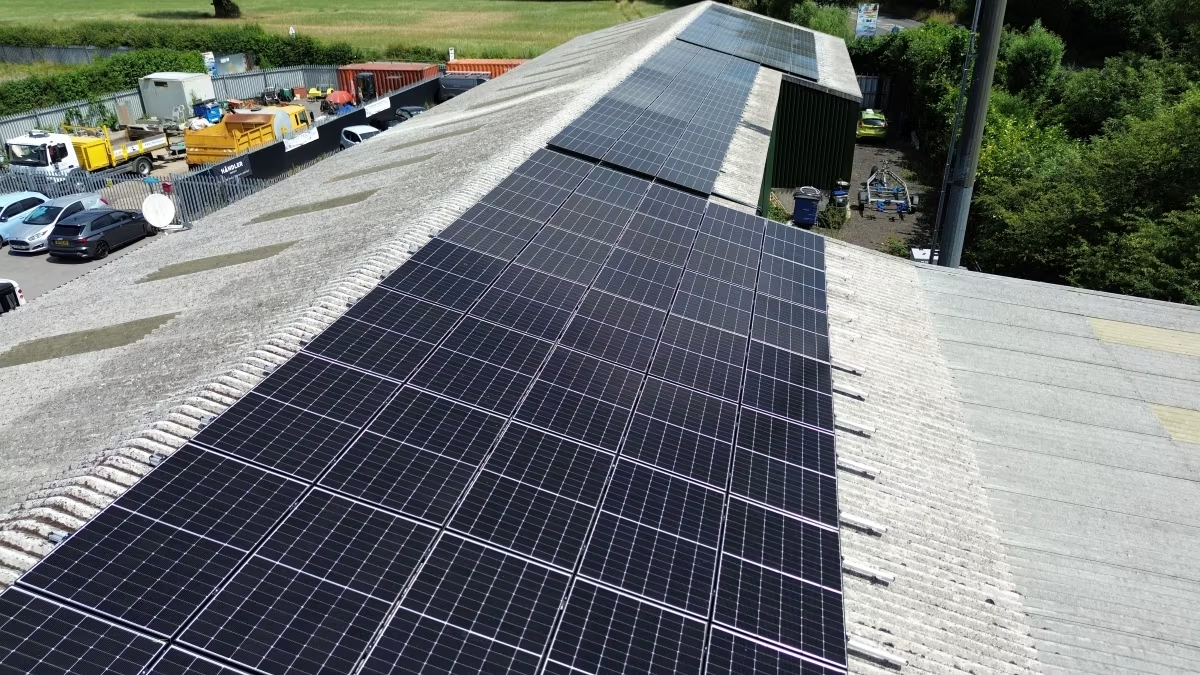
Agriculture
Belcher Farms operates multiple agricultural sites across the region, including Newlands Farm and Grange Farm, mixed-use sites with high year-round energy demands from livestock operations, machinery and tenant occupants. Like many farms, these were facing significant cost pressure due to the continued rise in energy prices amongst other economic burdens.
...

Our latest whitepaper is designed to help businesses and commercial landlords navigate the opportunities and challenges of solar energy adoption. This in-depth guide explores the key steps to developing successful commercial solar projects, whether you own a single property or manage a diverse portfolio. Drawing on our real-world experience, the whitepaper covers everything from assessing rooftop suitability to understanding performance guarantees and compliance requirements.
Crucially, it also breaks down the latest financing options available, including power purchase agreements (PPAs), capital investment models, and landlord-tenant cost-sharing strategies. For commercial landlords, we offer practical guidance on how to structure solar projects that align with lease terms and add long-term value to your properties. Whether you're looking to reduce operational costs, meet ESG targets, or attract sustainability-minded tenants, this whitepaper is your essential roadmap to making solar work for your business.



© 2026 Absolar Solutions Limited