
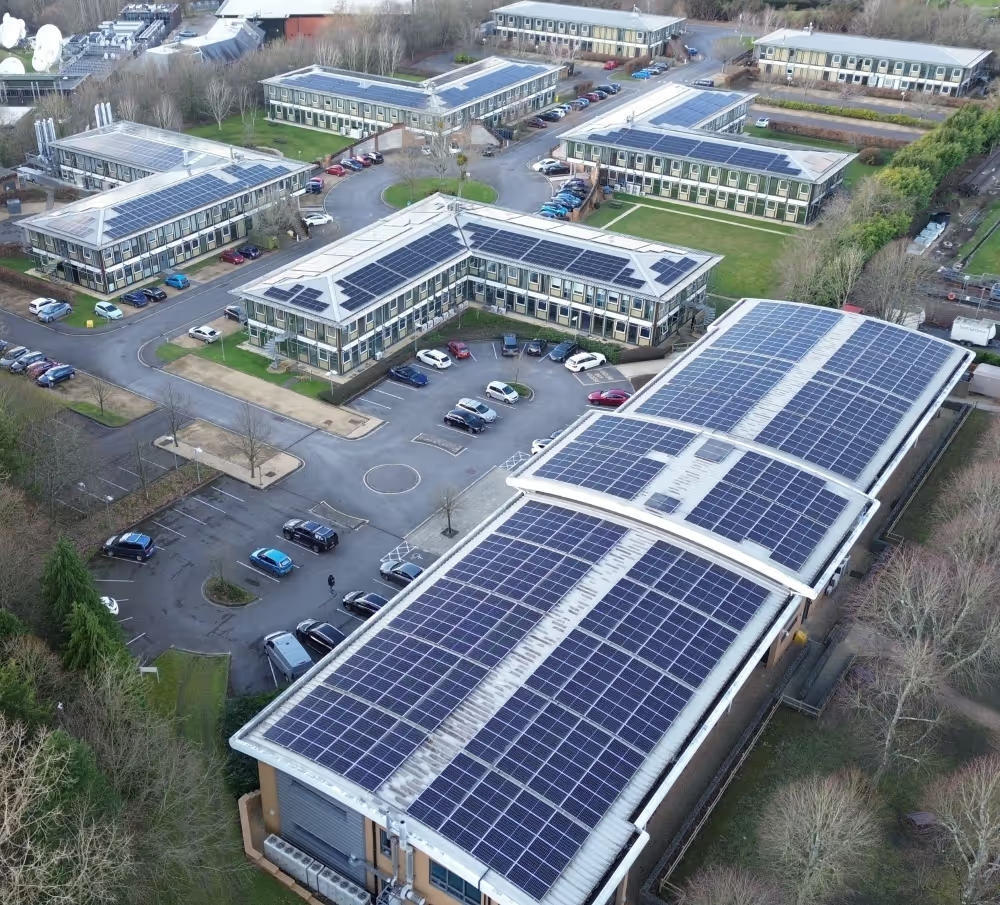
Across these sectors Absolar have installed solar PV systems that have successfully reduced energy bills without any disruption to their business operations.

Large roof space availability. Significant energy bill reduction with additional income stream from energy export.

High electricity demand from office appliances, matching solar PV generation pattern.

As an energy-intense industry, manufacturing facilities benefit significantly from having free, clean solar energy.
Consistent building upgrade with property value and ESG benefits. Significant operational cost savings.
.webp)
Optimal roof space available for solar panels. Low installation costs and potential for export income

Significant energy demand could be offset by solar energy, reducing operational costs.

Complex roof structure requires solar simulation modelling, matching demand profile with solar generation.

High energy usage by printing equipment offset by renewable electricity, significantly reducing operational costs

Large rooftop spaces for electricity generation, reducing operational costs significantly.

Energy simulation to match consumption profile with roof space assessment.

Improving ESG, reducing energy costs, future-proof building with energy system upgrade.

Electricity usage in computing equipment met by renewable energy, improving ESG and energy independence.
.jpg)
Constant electricity demand from the use of CNC machines has been offset by clean, free solar electricity.


Industrial estates hold some of the most productive solar rooftops in the UK: steel portal frame units, minimal shading, and occupiers running energy-hungry equipment through daylight hours. Absolar assesses every unit on your estate remotely, ranks the rooftops by return, and delivers a phased installation plan with zero disruption to tenants.
Industrial parks are central to the UK's economic growth, bringing production, logistics and enterprise together in environments built for output. Their buildings share characteristics that make them ideal for solar: large-span steel roofs, high daytime consumption from machinery, compressors and CNC equipment, and multiple units that can be assessed and installed as a single coordinated programme.
For estate owners and managers, that last point matters most. Solar delivered estate-wide costs less per kWp than unit-by-unit projects, strengthens the estate's occupier proposition, and turns unused roof area into a long-term income-generating asset.
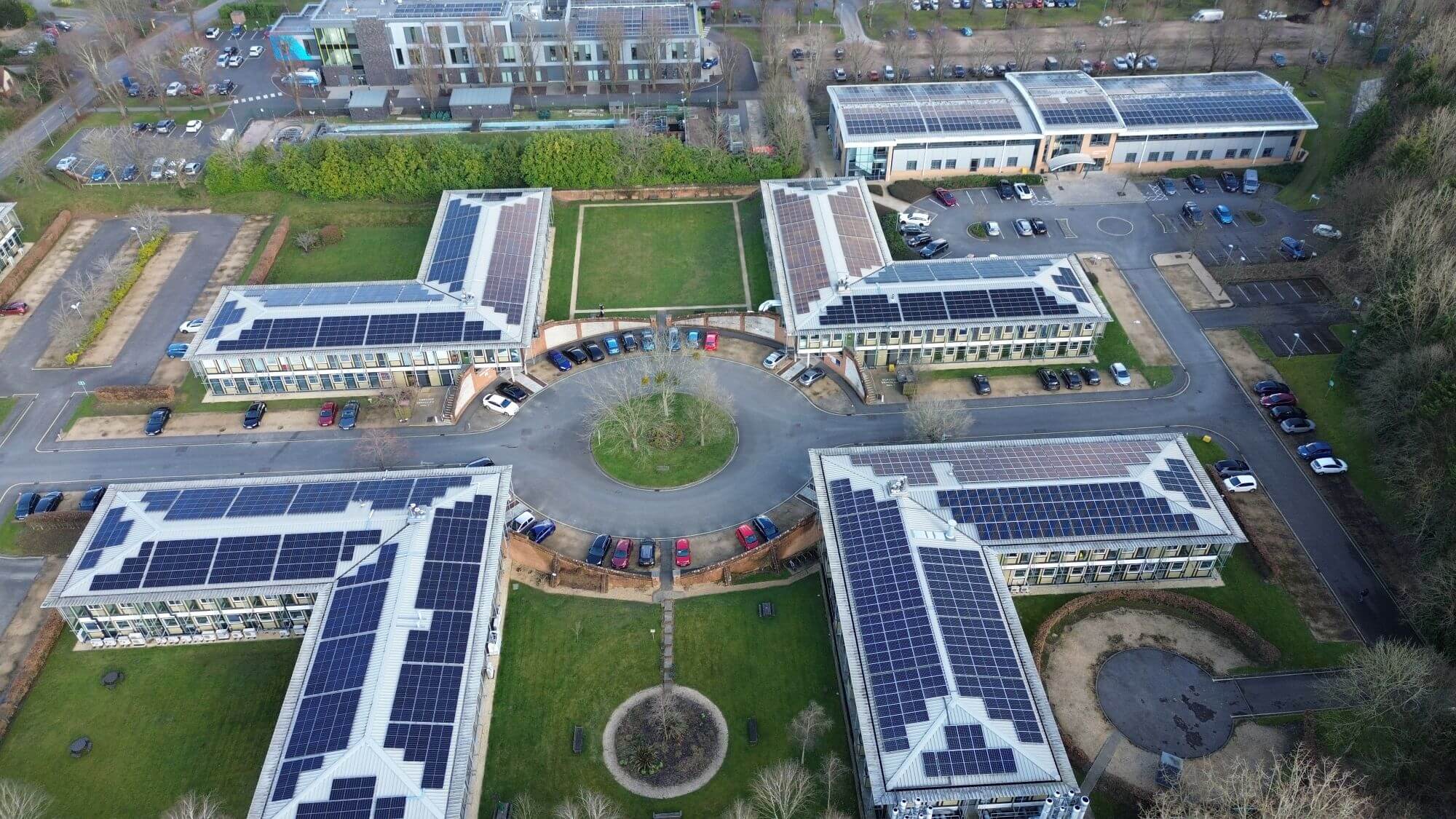
What Absolar has done for us here at the science park in terms of mapping the solar radiation that falls on the roofs of the buildings is extendable to any business park or any science park, or in fact any collection of buildings around the country. It's great to have a sit down with them and talk about what they could do to help us.
Robin Chave, CEO of University of Southampton Science Park
Absolar has designed and installed solar across industrial units of every scale in the South of England.
Draper Tools, North Baddesley. Over 900 panels (520 kWp) on a 25,000 square metre distribution facility, now generating 73% of the site's power needs and preventing over 100 tonnes of CO2 a year, with a payback of around four years. A second Absolar installation followed at Draper's Chandler's Ford headquarters.
South Coast Building Group, Andover. A multi-unit industrial park installation delivering significant operational cost reductions across large rooftop spaces.
Golden Arrow, Holton Heath Trading Park. A steel portal frame unit combining warehouse, workshop and office space, where our half-hourly demand modelling matched a complex consumption profile to the optimal system design.
Diametric Technical, precision engineering. Constant daytime electricity demand from CNC machines, now offset by clean solar generation.
Read the Draper Tools, South Coast Andover and Golden Arrow case studies


.png)










Most installers quote one roof at a time. Absolar assesses the whole estate at once.
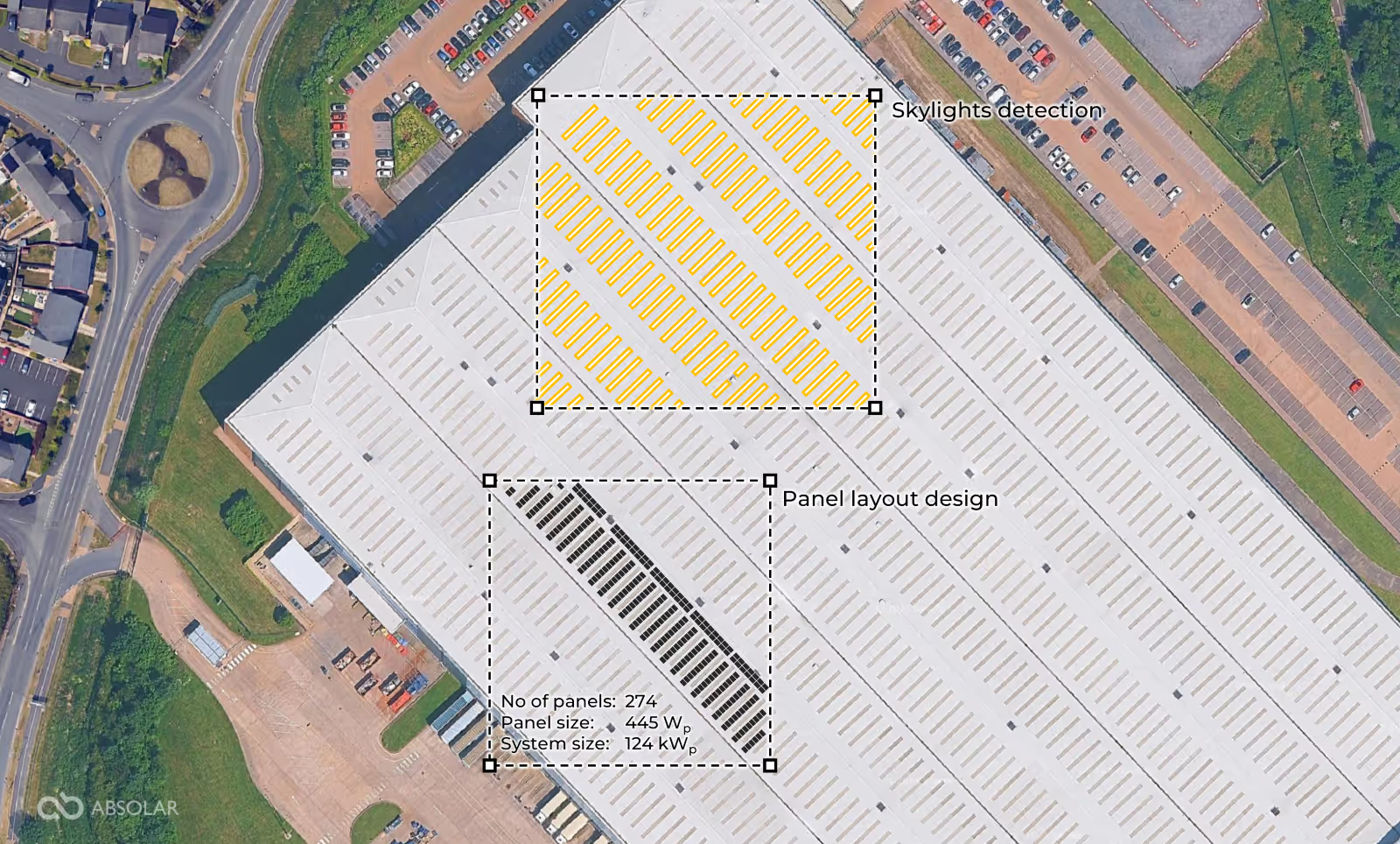
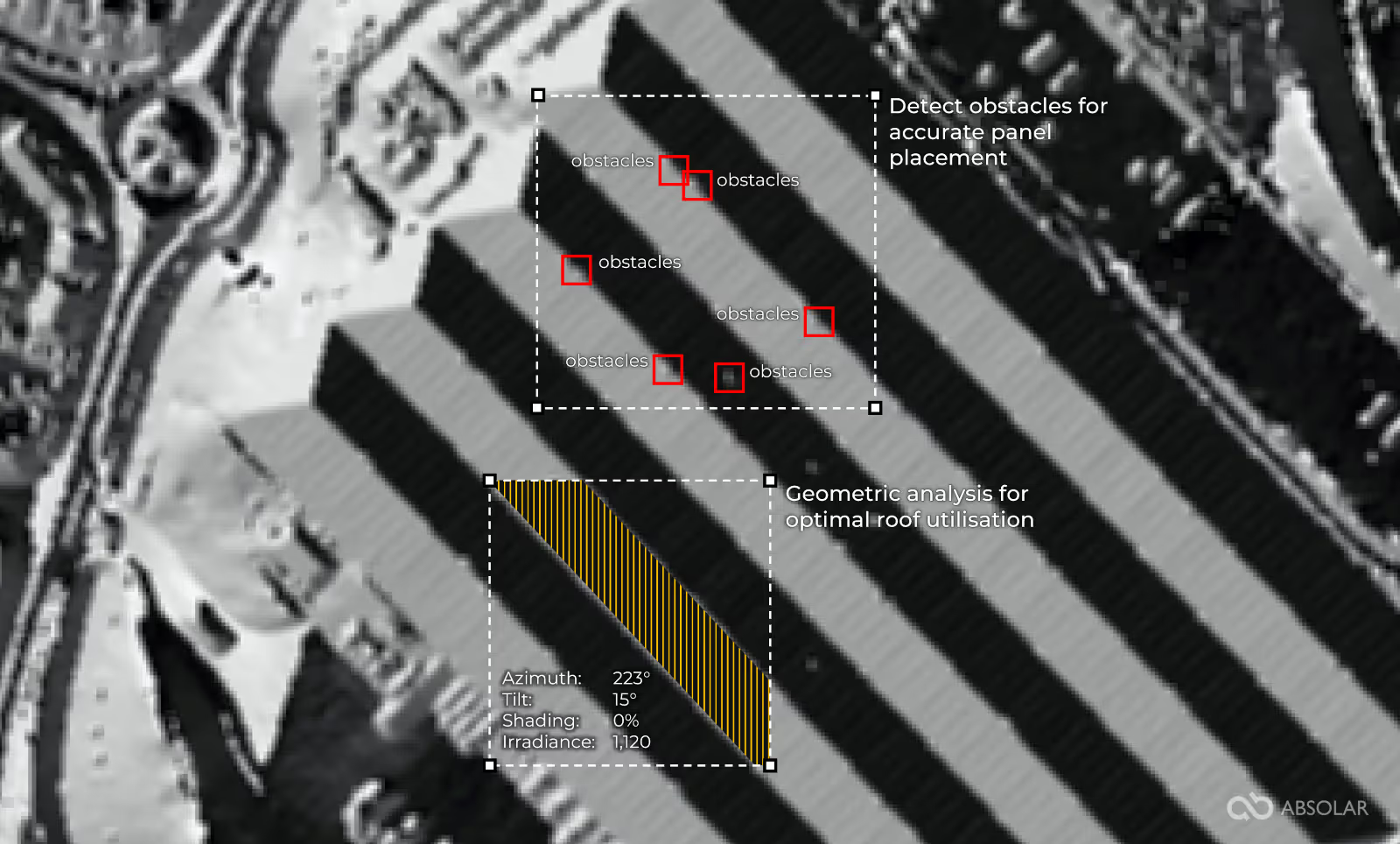
Using high-resolution LiDAR mapping and AI analysis, we remotely evaluate every unit: roof area, orientation, structural type, shading, and obstructions such as skylights, flues and rooftop plant. Results are cross-referenced with occupancy, lease structures and consumption data, producing a ranked list of rooftops by engineering feasibility and financial return.
Estate owners receive a clear, phased investment plan: install the strongest performers first, then let early savings fund later phases. Every system is monitored through our smart platform, with generation and carbon data reportable across the whole portfolio.
Industrial units combine large rooftop areas with heavy daytime consumption. Rooftop solar drastically cuts grid consumption from day one, and across a multi-unit estate the savings compound.
Using representative market values, a typical industrial park solar project delivers over 30% internal rate of return, with average payback under four years. With a lifespan of 30+ years, solar offers long-term energy price stability for landlords and occupiers alike.
Solar is a capital improvement that enhances unit value and the estate's sustainability credentials. Through Absolar's finance partners, asset-based funding lets estates install without upfront capital, protecting cashflow while systems pay for themselves.
When generation exceeds consumption, Absolar arranges export to the grid under competitive tariffs, creating an income stream that's particularly valuable at weekends and during shutdown periods.
Manufacturers and logistics operators increasingly weigh energy costs and green credentials when choosing premises. On-site solar gives tenants access to cheaper, verifiable clean energy, strengthening the estate's letting proposition.
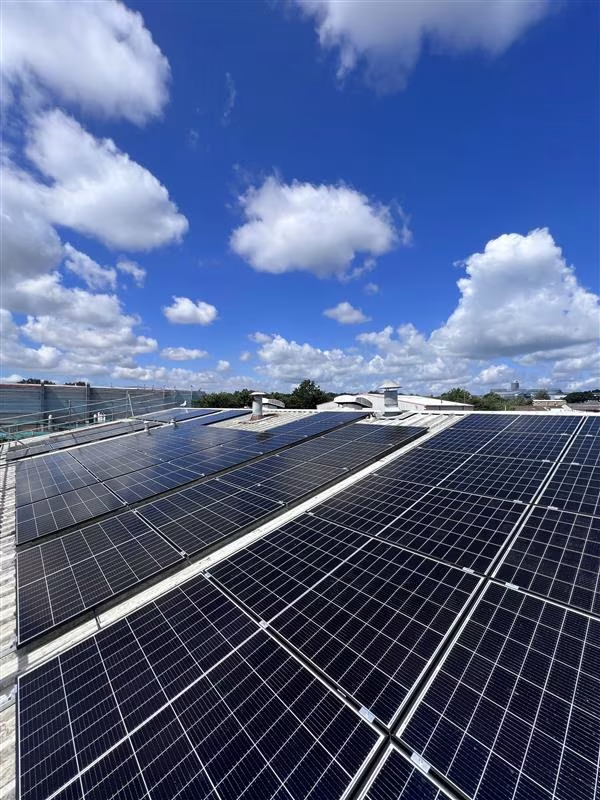

Industrial estates often involve a mix of owner-occupiers, leased units and multi-tenanted buildings. Our whitepaper, Unlocking the Potential of Commercial Solar, covers the practical structures in detail, including power purchase agreements, capital investment models and landlord-tenant cost-sharing strategies, with guidance on aligning solar projects with lease terms.
At Absolar, engineering is at the heart of everything we do. Our commitment to quality starts with rigorous site analysis and design, ensuring every installation is tailored for optimal performance and longevity. We design systems to last, using proven technologies and components that meet the highest industry standards.
Our in-house engineering team brings decades of experience across electrical, structural and renewable energy disciplines, allowing us to anticipate and solve challenges before they become problems, from feasibility through commissioning. We stand behind our work with robust quality assurance, performance monitoring and post-installation support.

Most steel portal frame buildings can, but structural capacity of the frame and purlins is confirmed for every unit before design is finalised. Our remote survey flags likely constraints across the estate before you commit to anything.
There are established structures for this, including landlord-owned systems selling power to tenants at a discount through a power purchase agreement. Lease terms are factored into our assessment from the start.
No. Installations at Draper Tools (900+ panels) and Hobbs the Printer (489 panels) completed with no interference to daily operations. Access routes, loading bays and working patterns are planned around from the outset.
No. The estate-wide assessment ranks every rooftop, the strongest performers are installed first, and later phases follow as returns come in.
Our AI roof detection identifies obstructions automatically from LiDAR data, and panel layouts are designed around them from the outset, protecting both installer safety and generation.
Request a free remote survey. We assess every unit on your estate without a site visit and report back with a ranked, board-ready investment plan.


The solar PV system has been a significant investment for us as a business but one that we hope represents our commitment to the future and to sustainable business practices. We might be over 100 years old but we’re not standing still, we’re always looking to the future, adapting and evolving to meet the changing needs of our customers.
Matt Sheen, CEO at Draper Tools

I had the privilege of unveiling Draper Tools' ambitious 900+ solar panel installation at their North Baddesley site this week. This is already generating 73% of the facility’s power needs and is set to prevent over 100 tonnes of carbon emissions per year.
Delivered by local solar specialists Absolar, this project sets a strong example of how businesses can lead the way in sustainability while also securing long-term energy savings.
Caroline Nokes, MP

An exceptional service from start to finish. Planning, preparation and installation of our 489 PV panels was completed with clear and detailed communication and there was no interference to day-to-day operations. Highly recommended.
Chris Hobbs, Business Development Director at Hobbs the Printer
.jpg)
From the very first meeting, I was won over and every touch point since has just reinforced my view of Absolar. They are brilliant and at what they do - and infectiously passionate about it. The initial proposal was logically laid out, compelling and contained all the financial justification elements a business would need (this made a potentially subjective decision highly objective). Having had our system for 3 years, we have experienced amazing ongoing collaboration and support. I could not be happier with our PV system and the support we get from Absolar… just awesome...
Dr Stephen Rowe, Managing Director at DEKRA UK

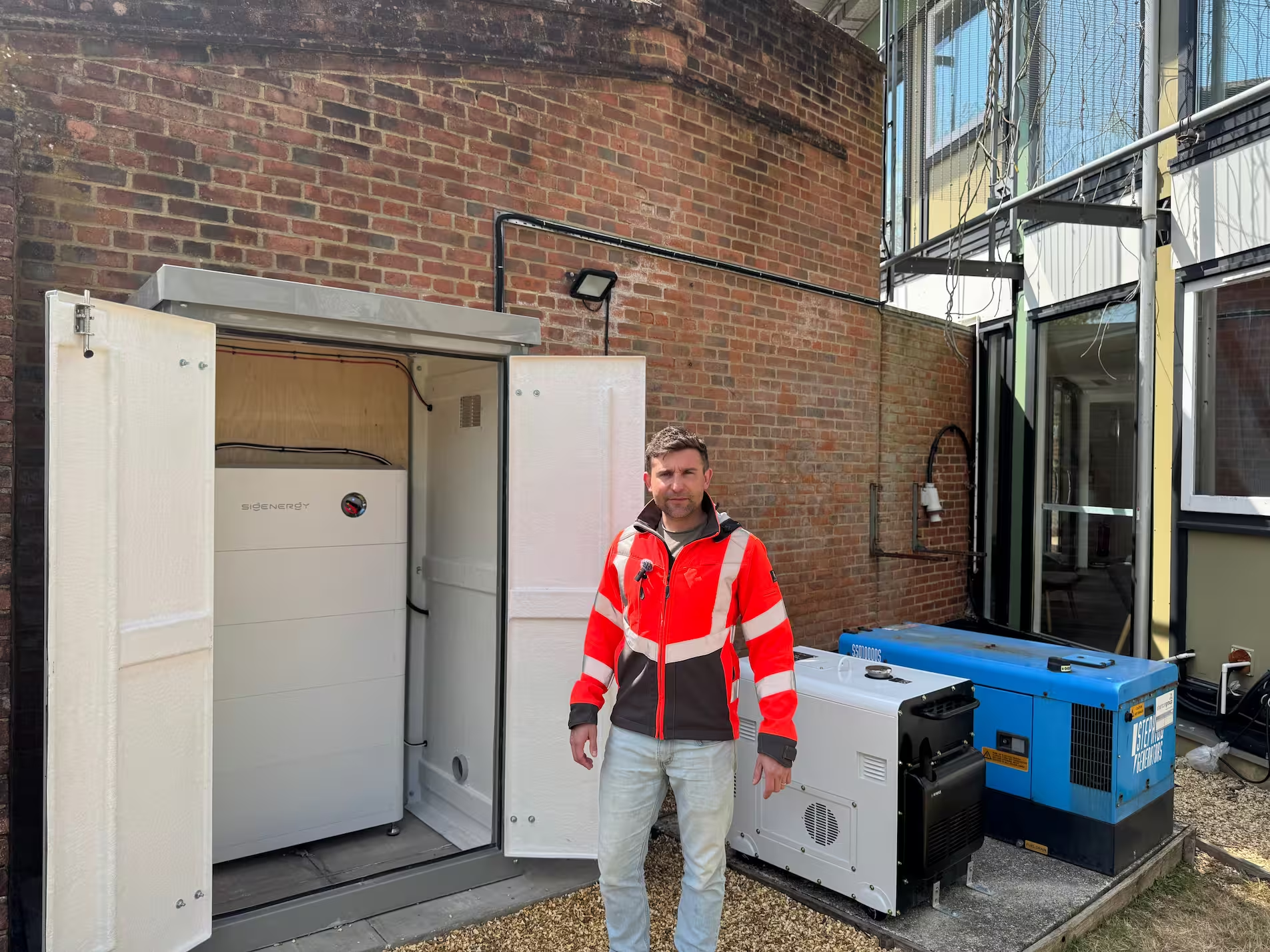
Commercial | Science Park
The work is taking place at Gamma House, where a conventional diesel-run backup power generator is to be replaced with a significantly more sustainable solution that cleverly integrates on-site solar generation, battery storage and grid connectivity.
Back-up power is essential for all business continuity, yet projects of this nature remain relatively uncommon due to their technical complexity and the investment required to deliver effective systems that meet both operational requirements and wider ESG objectives. This complex project has only been made possible through deep collaborative work with experts in renewables, data science, IT and physical infrastructure.
...

Commercial | Equestrian
Hurst Grange Farm House is a characterful equestrian facility located in the rural setting of Hurst, near Reading. The site features traditional farm structures and outbuildings that provide ample roof space for renewable energy generation, supporting the high energy demands of a working equestrian estate.
...
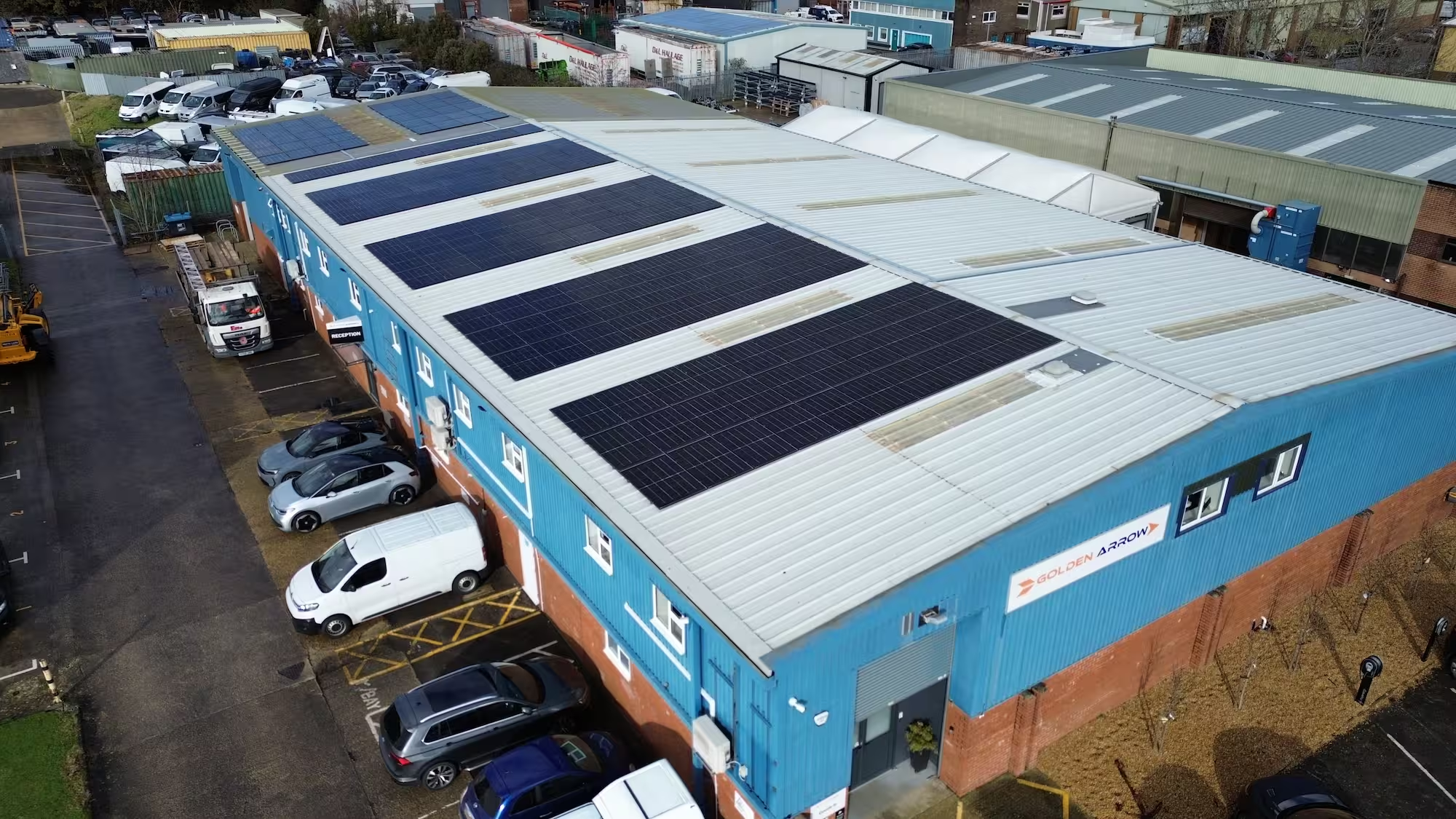
Engineering | Industrial Unit
Located within Holton Heath Trading Park, the building forms part of a modern industrial complex constructed with a steel portal frame, brick and metal-clad elevations, and a steel profile roof. Units in this development include a main warehouse or workshop space, loading doors for vehicle access, and integrated office accommodation, all of which contribute to a complex energy demand profile that has been assessed by Absolar during the initial design process.
...

Our latest whitepaper is designed to help businesses and commercial landlords navigate the opportunities and challenges of solar energy adoption. This in-depth guide explores the key steps to developing successful commercial solar projects, whether you own a single property or manage a diverse portfolio. Drawing on our real-world experience, the whitepaper covers everything from assessing rooftop suitability to understanding performance guarantees and compliance requirements.
Crucially, it also breaks down the latest financing options available, including power purchase agreements (PPAs), capital investment models, and landlord-tenant cost-sharing strategies. For commercial landlords, we offer practical guidance on how to structure solar projects that align with lease terms and add long-term value to your properties. Whether you're looking to reduce operational costs, meet ESG targets, or attract sustainability-minded tenants, this whitepaper is your essential roadmap to making solar work for your business.



© 2026 Absolar Solutions Limited

.avif)